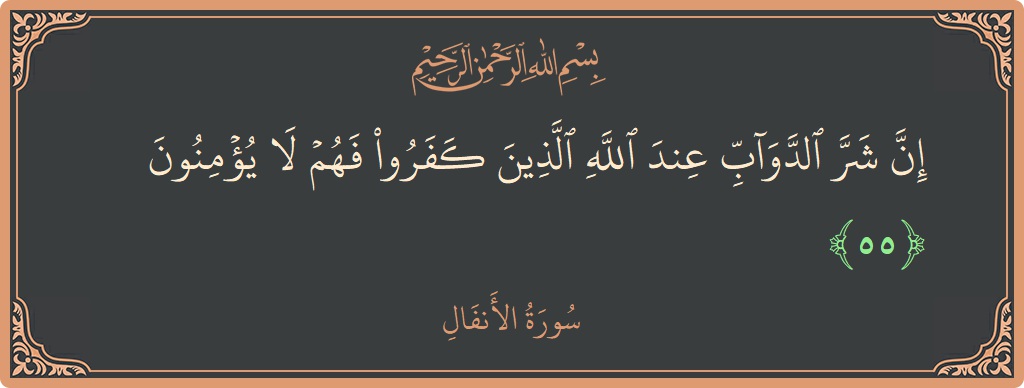
Surah Al-Anfaal: Verse 55 - إن شر الدواب عند الله... - English
Tafsir of Verse 55, Surah Al-Anfaal
English Translation
Indeed, the worst of living creatures in the sight of Allah are those who have disbelieved, and they will not [ever] believe -English Transliteration
Inna sharra alddawabbi AAinda Allahi allatheena kafaroo fahum la yuminoonaTafsir of Verse 55
In the verse which follows immediately, it was said about the same disbelievers: إِنَّ شَرَّ الدَّوَابِّ عِندَ اللَّـهِ الَّذِينَ كَفَرُوا (Surely, the worst of all the living, in the sight of Allah, are those who reject Faith - 55). Here, the word: دَوَابّ (dawabb) is the plural form of dabbah which literally means creatures who walk on the earth. Therefore, this word covers human beings and whatever of the animals walk on the earth. But, in common usage, this word is used particularly for quadruped animals. Since they were far below animals in their state of insensitiveness, they were identified with that expression in the language. Thus, the meaning of the verse is clear - that these people were the worst of animals from among all animals and human beings. At the end of the verse, it was said: فَهُمْ لَا يُؤْمِنُونَ (so they do not believe - 55). The sense is that these people have allowed their God-given abilities to go waste by making the satisfaction of their physical needs the very purpose of their life, therefore, having access to the refinements of Faith was just not possible for them.
Sa’ id ibn Jubayr said that this verse was revealed about six men from the Jews about whom Allah Ta` ala has declared in advance that they will never enter the fold of Faith.
In addition to that, through this word, the aim is to grant an exemption from punishment for people who were though engaged at that time, in tandem with disbelievers, in their struggle against Muslims and Islam but the likelihood was that, in future, a time will come when they will repent their past mistakes and embrace Islam. The fact is that this is how it came to be. A very large group from among them became, by embracing Islam, not only personally pious and righteous, but rose to be - in word and deed alike - leaders among men and women of the world as heralds of moral betterment and paradigms of responsible conduct of life before the Creator.
Striking Hard against Those Who disbelieve and break the Covenants
Allah states here that the worst moving creatures on the face of the earth are those who disbelieve, who do not embrace the faith, and break promises whenever they make a covenant, even when they vow to keep them,
(and they do not have Taqwa) meaning they do not fear Allah regarding any of the sins they commit.
(So if you gain the mastery over them in war), if you defeat them and have victory over them in war,
(then disperse those who are behind them,) by severely punishing the captured people according to Ibn `Abbas, Al-Hasan Al-Basri, Ad-Dahhak, As-Suddi, `Ata' Al-Khurasani and Ibn `Uyaynah. This Ayah commands punishing them harshly and inflicting casualties on them. This way, other enemies, Arabs and non-Arabs, will be afraid and take a lesson from their end,
(so that they may learn a lesson. )
As-Suddi commented, "They might be careful not to break treaties, so that they do not meet the same end."