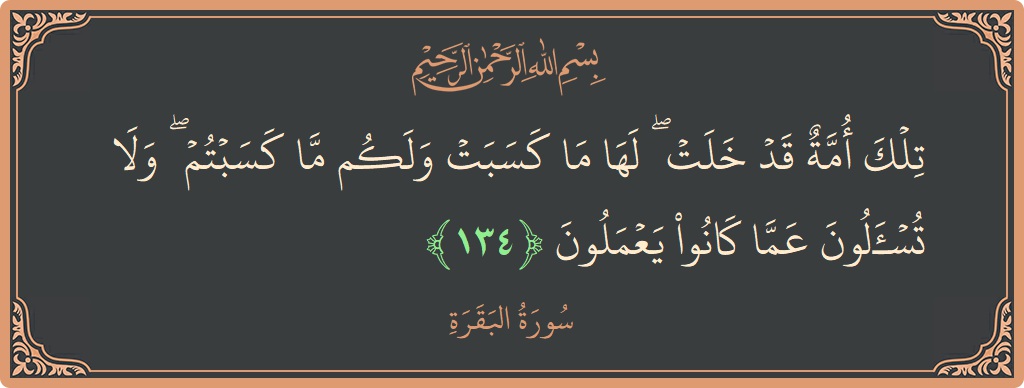
Surah Al-Baqara: Verse 134 - تلك أمة قد خلت ۖ... - English
Tafsir of Verse 134, Surah Al-Baqara
English Translation
That was a nation which has passed on. It will have [the consequence of] what it earned, and you will have what you have earned. And you will not be asked about what they used to do.English Transliteration
Tilka ommatun qad khalat laha ma kasabat walakum ma kasabtum wala tusaloona AAamma kano yaAAmaloonaTafsir of Verse 134
Verse 134 tells us that the good deeds of one's forefathers shall not suffice one, if one has not been performing good deeds oneself, and that, similarly, one shall not have to suffer for the misdeeds of one's forefathers, if one's own account is clean. It follows upon this principle that children of mushrikin مشرکین (associators) and Kafirin کافرین (infidels), if they die before having come of age, shall not be punished in the other world on account of the disbelief of their parents. The verse also refutes the claim of the Jews that irrespective of what they had been doing they would go to Paradise on account of the good deeds of their forefathers.
Let this be a warning to those Muslims who, being the descendants of the Holy Prophet ﷺ or of a saint, delude themselves with the hope that their sins would go unpunished in consideration of this privileged position. In fact, the Holy Qur'an is very explicit and very insistent on this point. For example:
وَلَا تَكْسِبُ كُلُّ نَفْسٍ إِلَّا عَلَيْهَا ۚ وَلَا تَزِرُ وَازِرَةٌ وِزْرَ أُخْرَىٰ
"Each man shall reap the fruits of his own deeds, and no one shall bear the burden of another" (6:164).
Addressing his own clan, the Holy Prophet ﷺ said:
"Beware, 0 Banu Hashim, let it not be that on the Day of Judgment while others bring their good deeds with them, you on your part, having neglected good deeds, bring with you only the trust in being my relations, and so I have to tell you that on that day, I cannot save you from the wrath of Allah."
Another hadith says: من بطابہ عملہ لم یسرع بہ نسبہ :"He who has been pulled back by his deeds cannot be pushed forward by his ancestry."