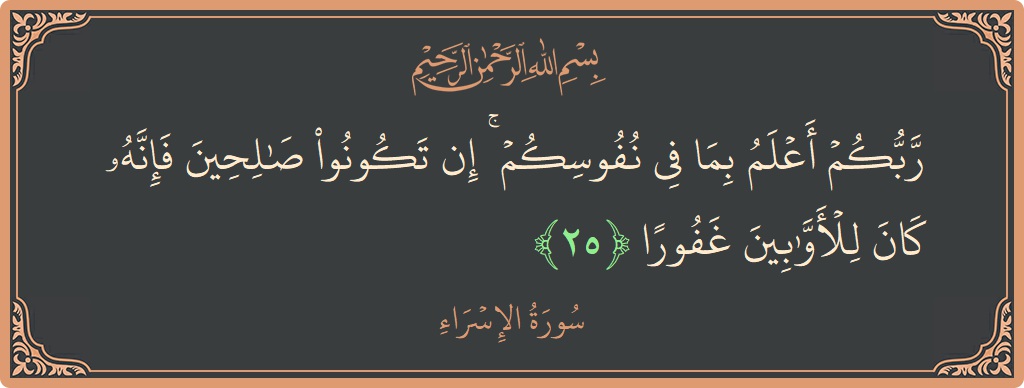
Surah Al-Israa: Verse 25 - ربكم أعلم بما في نفوسكم... - English
Tafsir of Verse 25, Surah Al-Israa
English Translation
Your Lord is most knowing of what is within yourselves. If you should be righteous [in intention] - then indeed He is ever, to the often returning [to Him], Forgiving.English Transliteration
Rabbukum aAAlamu bima fee nufoosikum in takoonoo saliheena fainnahu kana lilawwabeena ghafooranTafsir of Verse 25
In the last verse quoted above: رَّبُّكُمْ أَعْلَمُ بِمَا فِي نُفُوسِكُمْ (Your Lord knows best what is in your hearts - 25), any possible scruple that remains in the hearts of children as to how they were going to comply satisfactorily with divine injunctions relating to consistent observance of etiquette and respect due to parents. They have to live with parents all the time. Then, living conditions of the parties vary. They do not stay the same all the time. May be, on some such occasion, they happen to utter something, something that turns out to be against the norms of due etiquette, then, they stand facing the warning of Hell. Given this probability, it would be-come extremely difficult for them to wriggle out from this situation. In this verse, it is to remove this doubt and heart-burning that it was said: Should any such word come to be uttered out of sheer anxiety or lack of discretion - but, without intentional disrespectfulness - then, one must repent and resolve not to do that ever again. If so, since Allah Ta` ala knows the secrets of hearts and knows what was uttered was not to show disrespect or hurt, things will turn out for the better, for He is Most-Merciful. The word: الاوَّابِينَ (al-awwabin: those who turn to Him) used here carries the sense of اَلتَوَّابِین (at-tawwabin: those who repent before Him). The Hadith calls the six raka'at after Maghrib and the nawafil of al-Ishraq as the Salah al-Awwabin. Embedded here is the hint that the taufiq (ability) of these prayers is granted only to those who are the Awwabin and Tawwabin.
Omissions comitted against Parents are pardoned with Good Relations and Repentance
Sa`id bin Jubayr said: "This refers to a man who said something that he did not think would be offensive to his parents." According to another report: "He did not mean anything bad by that." So Allah said:
(Your Lord knows best what is in your souls. If you are righteous,)
(He is Ever Most Forgiving to those who turn to Him in repentance.) Qatadah said: "To the obedient who pray."
(He is Ever Most Forgiving to those who turn to Him in repentance.) Shu`bah narrated from Yahya bin Sa`id from Sa`id bin Al-Musayyib; "This refers to those who commit sin then repent, and commit sin then repent." `Ata' bin Yasar, Sa`id bin Jubayr and Mujahid said: "They are the ones who return to goodness." Mujahid narrated from `Ubayd bin `Umayr, concerning this Ayah: "This is the one who, when he remembers his sin when he is alone, he seeks the forgiveness of Allah." Mujahid agreed with him on that. Ibn Jarir said: "The best view on this matter is of those who said that it refers to the one who repents after committing sin, who comes back from disobedience to obedience and who leaves that which Allah hates for that which He loves and is pleased with. " What he said is correct, for Allah says,
(Verily, to Us will be their return) (88:25). And according to a Sahih Hadith, the Messenger of Allah would say when he returned from a journey,
(We have returned repenting, worshipping and praising our Lord.)