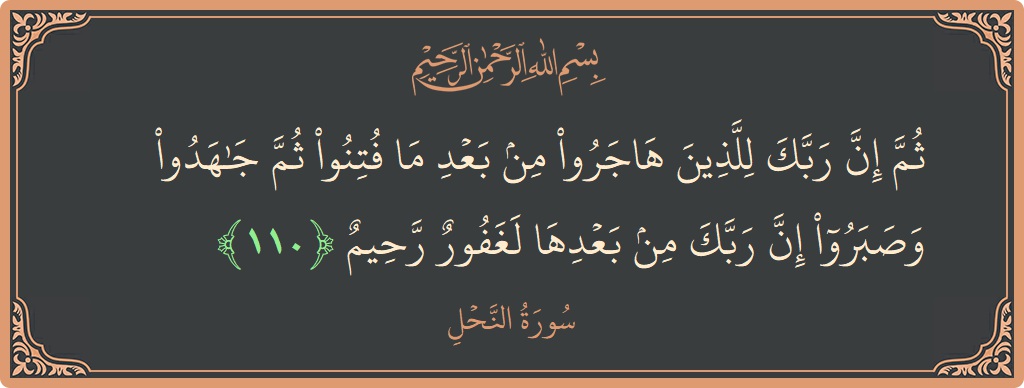
Surah An-Nahl: Verse 110 - ثم إن ربك للذين هاجروا... - English
Tafsir of Verse 110, Surah An-Nahl
English Translation
Then, indeed your Lord, to those who emigrated after they had been compelled [to renounce their religion] and thereafter fought [for the cause of Allah] and were patient - indeed, your Lord, after that, is Forgiving and MercifulEnglish Transliteration
Thumma inna rabbaka lillatheena hajaroo min baAAdi ma futinoo thumma jahadoo wasabaroo inna rabbaka min baAAdiha laghafoorun raheemunTafsir of Verse 110
Sequence of Verses
Warnings of punishment against disbelief (kufr) - whether original or apostacy (irtidad) - appeared in previous verses. After that, in the first (106) of the initial three verses cited above, it has been pointed clearly that 'Iman or the declaration of faith is a wealth that could work wonders for a kafir (disbeliever) or murtadd (apostate) who - if he were to come up with an honest and true 'Iman - all his past sins would stand forgiven.
In the second verse (107), the last day of Qiyamah was mentioned for the reason that all this phenomena of reward and punishment has to occur after that. In the third verse (108), it was said that the real punishment of disbelief and sin will, though come after the Qiyamah, yet there are some sins the punishment of which is faced in a certain degree within the present world.
The One who is forced to renounce Islam will be forgiven if He does Righteous Deeds afterwards
This refers to another group of people who were oppressed in Makkah and whose position with their own people was weak, so they went along with them when they were tried by them. Then they managed to escape by emigrating, leaving their homeland, families and wealth behind, seeking the pleasure and forgiveness of Allah. They joined the believers and fought with them against the disbelievers, bearing hardship with patience. Allah tells them that after this, meaning after their giving in when put to the test, He will forgive them and show mercy to them when they are resurrected.
((Remember) the Day when every person will come pleading) meaning making a case in his own defence.
(for himself.) means, no one else will plead on his behalf; not his father, not his son, nor his brother, nor his wife.
(and every one will be paid in full for what he did,) meaning whatever he did, good or evil.
(and they will not be dealt with unjustly.) meaning there will be no decrease in the reward for good, and no increase in the punishment for evil. They will not be dealt with unjustly in the slightest way.