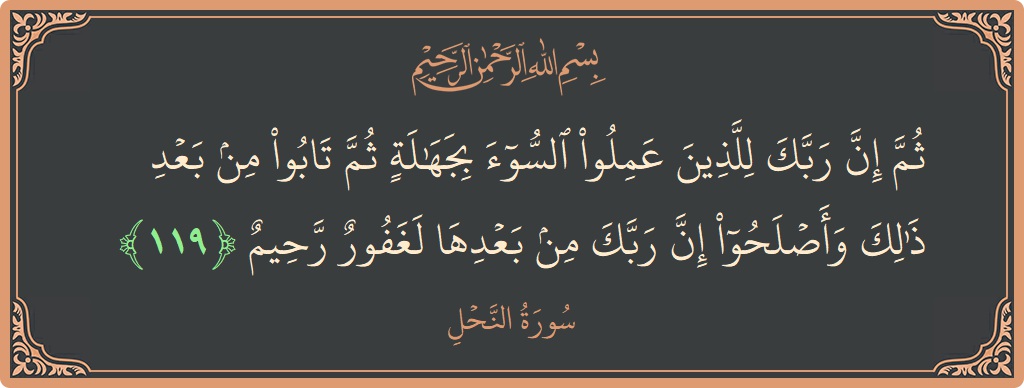
Surah An-Nahl: Verse 119 - ثم إن ربك للذين عملوا... - English
Tafsir of Verse 119, Surah An-Nahl
English Translation
Then, indeed your Lord, to those who have done wrong out of ignorance and then repent after that and correct themselves - indeed, your Lord, thereafter, is Forgiving and Merciful.English Transliteration
Thumma inna rabbaka lillatheena AAamiloo alssooa bijahalatin thumma taboo min baAAdi thalika waaslahoo inna rabbaka min baAAdiha laghafoorun raheemunTafsir of Verse 119
Repentance from Sin brings Forgiveness: Is it Open or Restricted?
In the last verse (119): ثُمَّ إِنَّ رَبَّكَ لِلَّذِينَ عَمِلُوا السُّوءَ بِجَهَالَةٍ (Then your Lord – for those who did evil through ignorance ...), it will be noticed that the sense of ignorance has been conveyed by the use of the word: جَهَالَةٍ (jahalah), not: جَھل (jahl). As for the word: جَھل (jahl), it is employed as an antonym of: عِلَم (` ilm: knowledge) and releases the sense of a lack of knowledge or understanding while the word: جَهَالَةٍ (jahalah) denotes acting ignorantly - even if done knowingly. This tells us that the forgiveness of sins through Taubah (repentance) is not restricted to a situation where a sin is committed with lack of understanding or volition. (Rather, a true taubah or repentance may forgive all sins, even though committed deliberately).