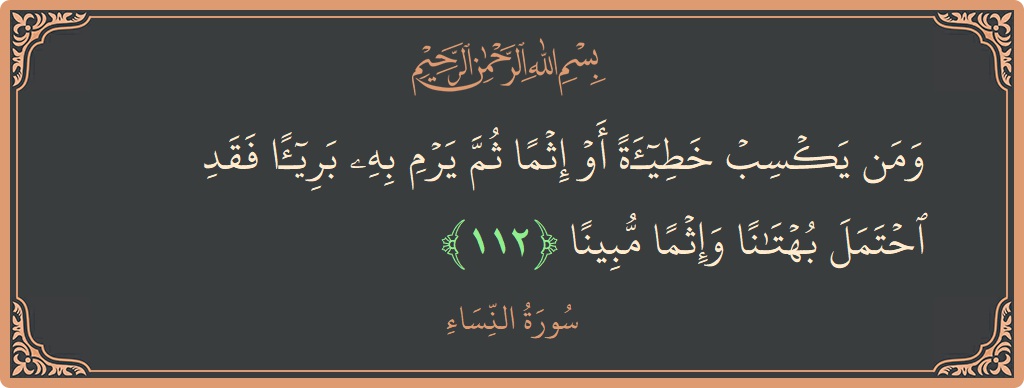
Surah An-Nisaa: Verse 112 - ومن يكسب خطيئة أو إثما... - English
Tafsir of Verse 112, Surah An-Nisaa
وَمَن يَكْسِبْ خَطِيٓـَٔةً أَوْ إِثْمًا ثُمَّ يَرْمِ بِهِۦ بَرِيٓـًٔا فَقَدِ ٱحْتَمَلَ بُهْتَٰنًا وَإِثْمًا مُّبِينًا
English Translation
But whoever earns an offense or a sin and then blames it on an innocent [person] has taken upon himself a slander and manifest sin.English Transliteration
Waman yaksib khateeatan aw ithman thumma yarmi bihi bareean faqadi ihtamala buhtanan waithman mubeenanTafsir of Verse 112
And whosoever earns a fault or a sin and then casts it upon the innocent, thereby has laid upon himself calumny and manifest sin.
But if any one earns a fault or a sin and throws it on to one that is innocent, He carries (on himself) (Both) a falsehood and a flagrant sin.
In the eighth verse (112), a general rule of conduct has been set forth. It stipulates that anyone who himself commits a crime, then goes on to put the blame on some innocent person (as in the episode cited above where the theft was committed by Banu Ubayriq themselves and they went on to put the blame on Sayyidna Labid or the Jew) has done something grave by levelling a false accusation of great magnitude against an innocent person plus an open sin weighing heavy on one's shoulders.