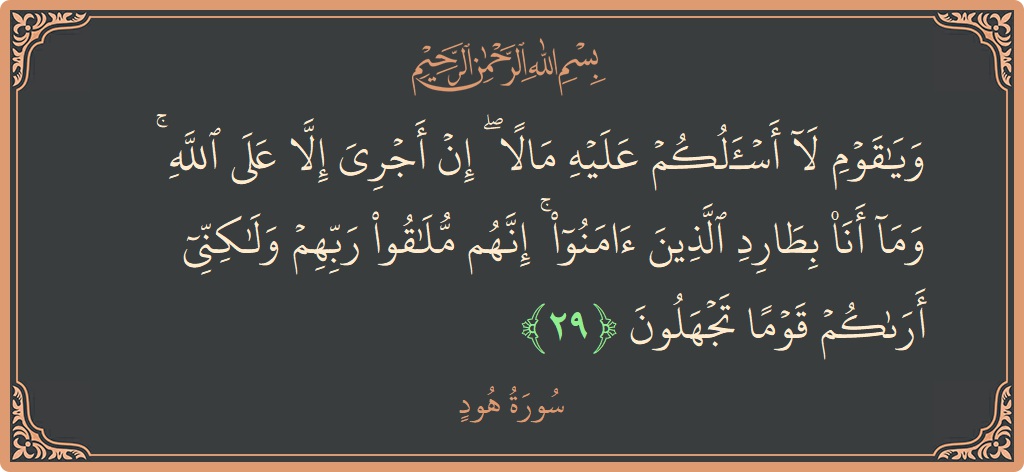
Surah Hud: Verse 29 - ويا قوم لا أسألكم عليه... - English
Tafsir of Verse 29, Surah Hud
English Translation
And O my people, I ask not of you for it any wealth. My reward is not but from Allah. And I am not one to drive away those who have believed. Indeed, they will meet their Lord, but I see that you are a people behaving ignorantly.English Transliteration
Waya qawmi la asalukum AAalayhi malan in ajriya illa AAala Allahi wama ana bitaridi allatheena amanoo innahum mulaqoo rabbihim walakinnee arakum qawman tajhaloonaTafsir of Verse 29
Then, they were told: ` As for the condition you impose that I should remove the poor from my company in order that you could believe, then let it be very clear that I cannot do that. They may be poor but they are close to the Highest of the high, the greatest honor one can have. Turning such people out is not a right thing to do.'
And: مُّلَاقُو رَبِّهِمْ (They are surely to meet their Lord) could also mean: If, supposedly, I were to turn them out, when they go to their Lord on the day of Qiyamah and complain, what would I have to say? The subject continues in the fourth verse (30): If I were to turn them out, who would save me from Divine punishment? At the end, it was said: All this is nothing but your ignorance and heedlessness. To you being a man is counter to being a prophet, or you go to the other extreme and demand that poor people should be driven away from his company.
(I am not going to drive away those who have believed.) This alludes to the fact that they (the disbelievers) requested Nuh to disassociate himself from the believers, because they were averse to them and felt themselves too important to sit with them. This is similar to the request of disbelievers to the seal of the Messengers to disassociate himself from a group of the people who were considered weak in their social status. They wanted the Prophet to sit with them in a special gathering of the elite. Therefore, Allah revealed,
(And turn not away those who invoke their Lord, morning and afternoon.) Allah also says,
(Thus We have tried some of them with others, that they might say: "Is it these (poor believers) whom Allah has favored from among us" Does not Allah know best those who are grateful)6:53