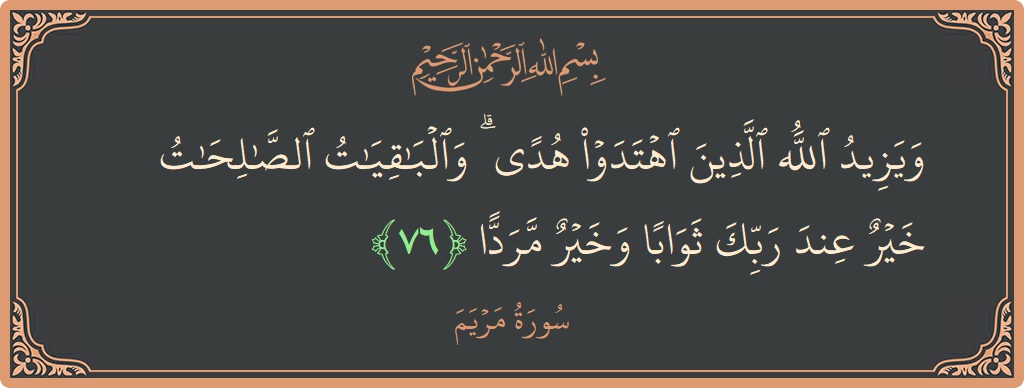
Surah Maryam: Verse 76 - ويزيد الله الذين اهتدوا هدى... - English
Tafsir of Verse 76, Surah Maryam
English Translation
And Allah increases those who were guided, in guidance, and the enduring good deeds are better to your Lord for reward and better for recourse.English Transliteration
Wayazeedu Allahu allatheena ihtadaw hudan waalbaqiyatu alssalihatu khayrun AAinda rabbika thawaban wakhayrun maraddanTafsir of Verse 76
وَالْبَاقِيَاتُ الصَّالِحَاتُ خَيْرٌ عِندَ رَبِّكَ ثَوَابًا وَخَيْرٌ مَّرَدًّا
''And the everlasting virtues are better with your Lord in respect of reward and better in their return". - 19:76
These words have been interpreted differently by different scholars as has been explained at some length in the commentary of Sarah Al-Kahf (سورۃ کھف). The more plausible interpretation, however, is that the words refer to submission to the commands of Allah and to good deeds, the benefits of which are everlasting.
مَّرَدًّا by means consequences, and the sense of this verse is that good deeds alone are the real wealth whose reward is great and whose result is eternal peace.
Increasing Guidance of Those Who are guided
After Allah mentions the extended time and respite that is allowed to those who are in misguidance, increasing them in misguidance, He informs of the increase in guidance of those who are rightly guided. Similarly He says,
(And whenever there comes down a Surah, some of them say: "Which of you has had his faith increased by it") 9:124 And the following Ayah also shows this. Concerning Allah's statement,
(And the righteous good deeds that last) Its explanation has already preceded in Surat Al-Kahf, along with a lengthy discussion concerning it and the related Hadiths.
((they) are better with your Lord for reward.) meaning the recompense and reward.
(and better for resort.) meaning in the final outcome, the result for its doer.